

Knee Joint Replacement in Vijayawada

What is Knee replacement surgery?
Knee replacement surgery, also known as knee arthroplasty, involves surgically installing metal and plastic components to restore function and alleviate pain in a severely damaged knee joint, often caused by conditions like osteoarthritis, rheumatoid arthritis, or traumatic injuries. Osteoarthritis, the most common, leads to cartilage deterioration and bone damage, especially in older adults, while rheumatoid arthritis causes joint inflammation and stiffness due to synovial membrane inflammation. Traumatic arthritis results from injury-related cartilage damage. The primary aim of Knee replacement surgery in Vijayawada is to replace the compromised joint surfaces with artificial parts, providing pain relief and improved mobility when conservative treatments have failed.
The knee joint
The knee joint is a vital hinge connecting the femur, tibia, and patella, supported by ligaments, tendons, muscles, and cartilage, all working together to enable smooth, stable movement. Key muscles like the quadriceps and hamstrings control extension and flexion, while ligaments provide stability by connecting bones, and tendons attach muscles to bones. Articular cartilage cushions bone ends, and the meniscus absorbs shocks and stabilizes the joint, with synovial fluid reducing friction. This intricate structure ensures the knee remains flexible yet resilient during activity.
Need for Knee replacement
Knee replacement surgery is a common intervention for severe knee joint damage, primarily resulting from osteoarthritis, which involves progressive cartilage breakdown causing pain, swelling, and limited mobility. Although osteoarthritis is the leading cause, other conditions such as rheumatoid arthritis, traumatic injuries like fractures, ligament tears, and cartilage damage can also lead to the need for surgery when conservative treatments—such as anti-inflammatory drugs, supplements like glucosamine, pain medications, activity adjustments, and assistive devices—fail to provide relief. A multidisciplinary preoperative approach under a Knee replacement specialist in Vijayawada often includes physical therapy to strengthen muscles, corticosteroid injections to reduce inflammation, Visco supplementation to improve joint lubrication, and weight management strategies, especially for obese individuals, to lessen joint stress and improve surgical success. This comprehensive management aims to optimize patient outcomes and restore knee function effectively.
Our More Specializations
Risks of the Procedure
Like any surgical intervention, knee replacement surgery carries potential risks, including but not limited to bleeding, infection, and the formation of blood clots in the legs or lungs. Other possible complications involve the prosthesis loosening, wearing out, or dislocating, which may necessitate revision surgery, as well as fractures around the implant. Patients might experience persistent pain or stiffness despite the procedure. There is also a risk of nerve or blood vessel injury during surgery, leading to numbness or weakness, and in some cases, the joint may not achieve the desired level of pain relief. Additional risks are specific to individual health conditions, so it’s essential to have a thorough discussion with your healthcare provider to address any concerns before proceeding.
Before the Procedure
Before your procedure, your healthcare team will thoroughly review your medical history, perform necessary tests, and explain the process, ensuring you understand and consent by signing a detailed form—asking questions if needed. Notify your doctor about allergies, current medications, herbal supplements, pregnancy status, or bleeding disorders, especially if you take blood thinners, as adjustments may be required. Prior to the procedure, you should abstain from eating or drinking for a minimum of eight hours, and there's a possibility you'll be administered a sedative to ease your anxiety and promote relaxation. Additionally, a physical therapist might discuss rehabilitation plans, and arranging support at home post-discharge is recommended; in case of Total knee replacement in Vijayawada your doctor may also specify other preparations based on your individual health needs.
During the Procedure
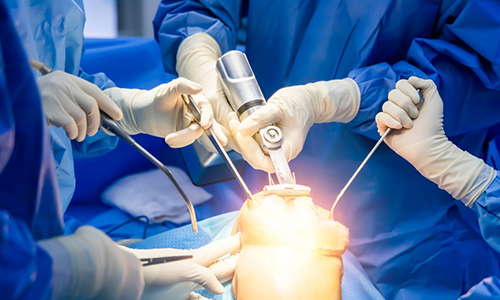
Knee replacement surgery is typically performed under general anesthesia, with careful preoperative preparation including removal of clothing, placement of an IV line, and possibly a urinary catheter by the best knee replacement surgeon in Vijayawada . The surgical procedure begins with cleansing the knee area using antiseptic, followed by an incision to access the damaged joint. The surgeon removes the worn surfaces of the knee and replaces them with a prosthetic made of metal and plastic, usually cemented to the bone for stability. The prosthesis includes components for the tibia, femur, and kneecap, designed to mimic natural movement. After securing the prosthesis, the incision is closed with sutures or staples, and a drain may be inserted to prevent fluid accumulation. The entire process is closely monitored by anesthesiologists, ensuring patient safety throughout. Postoperative care involves dressing the wound, managing pain, and beginning physical therapy to restore function and mobility.
After the Procedure
After your Knee joint replacement in Vijayawada, you'll be taken to the recovery zone where healthcare professionals will carefully observe your vital signs and ensure you're alert before transferring you to your hospital room, where you'll usually remain for several days to facilitate healing and recovery. Early mobilization is crucial; a physical therapist will assess you soon after surgery and develop a tailored exercise regimen, often involving a continuous passive motion (CPM) device that gently moves your new knee while you're resting, facilitated by pain management to ensure comfort and participation. Post-discharge, whether returning home or to a rehab facility, your healthcare team will coordinate ongoing physical therapy to help restore muscle strength and optimal joint mobility, ensuring a smooth recovery process.
Post Discharge
After surgery, maintaining cleanliness and dryness of the surgical site is crucial, following your doctor's specific bathing guidelines, with stitches or staples typically removed during a follow-up visit. To minimize swelling, elevating your leg and applying ice can be beneficial, along with taking prescribed pain medications—being cautious with drugs like aspirin that increase bleeding risk. Monitor for signs of infection or complications such as fever, increased pain, or unusual drainage, and promptly inform your healthcare provider if these occur. Resuming normal activities, including diet and driving, depends on the advice of your Orthopedician in Vijayawada, and full recovery may take several months, during which avoiding falls is essential; using assistive devices and home modifications like handrails, shower benches, and removing tripping hazards can enhance safety. Your healthcare team may also recommend specific activity restrictions, such as avoiding stairs until cleared, to protect your new joint and support a smooth recovery process.
Recovery
Knee replacement surgery often leads to significant pain reduction, enhanced mobility, and a substantial boost in overall quality of life, with most prosthetic joints functioning effectively for 15 to 20 years or more. Recovery time for knee replacement in Vijayawada can vary depending on individual health, age, and activity level, but typically, patients can expect to start walking with assistance within a few days and achieve significant mobility improvements within 6 weeks. Full recovery, including return to normal or near-normal activities, often takes around 3 to 6 months. Post-recovery, patients are encouraged to participate in gentle, low-impact activities like walking, swimming, cycling, or golfing, which help maintain joint health and overall fitness without risking damage to the artificial joint. It’s advisable to steer clear of high-impact endeavours such as running, jumping, or contact sports, as these can accelerate wear and tear on the prosthesis. To optimize long-term outcomes, patients should work closely with their healthcare team to develop a tailored activity plan that emphasizes safe, joint-friendly exercises, ensuring they stay active and healthy while preserving the longevity of the implant.
Discover unparalleled care at best hospital for knee replacement in Vijayawada. Our expert orthopedicians employ the latest techniques and cutting-edge technology to ensure swift recovery and lasting results. Whether you’re battling chronic pain or mobility issues, our compassionate team offers personalized treatment plans tailored to your needs. Equipped with state-of-the-art facilities and a patient-centric approach, we’re committed to restoring your mobility and quality of life.